Tracking · for creators
Payment Terms and Invoicing for UGC Creators
- Every invoice needs a number, both parties' details, a clear description, the amount, a due date, and how to pay you.
- Net 15 or net 30 from delivery is standard; ask for a deposit on larger jobs or new brands.
- Keep a simple log of every invoice's status — sent, due date, paid — so a late payment doesn't slip past you.
A UGC invoice needs a handful of specific fields to get paid on time. The terms you set — net days, a deposit, a late fee — decide how long you wait and what happens if a brand is slow. None of this is legal or tax advice. It's general practice most working creators settle on. Check a professional for anything specific to your country or business setup.
Two problems come up most. An invoice missing something a brand's accounts team needs before they'll pay. And no system for tracking which of several open invoices are actually settled. Both are fixable with the same handful of habits.
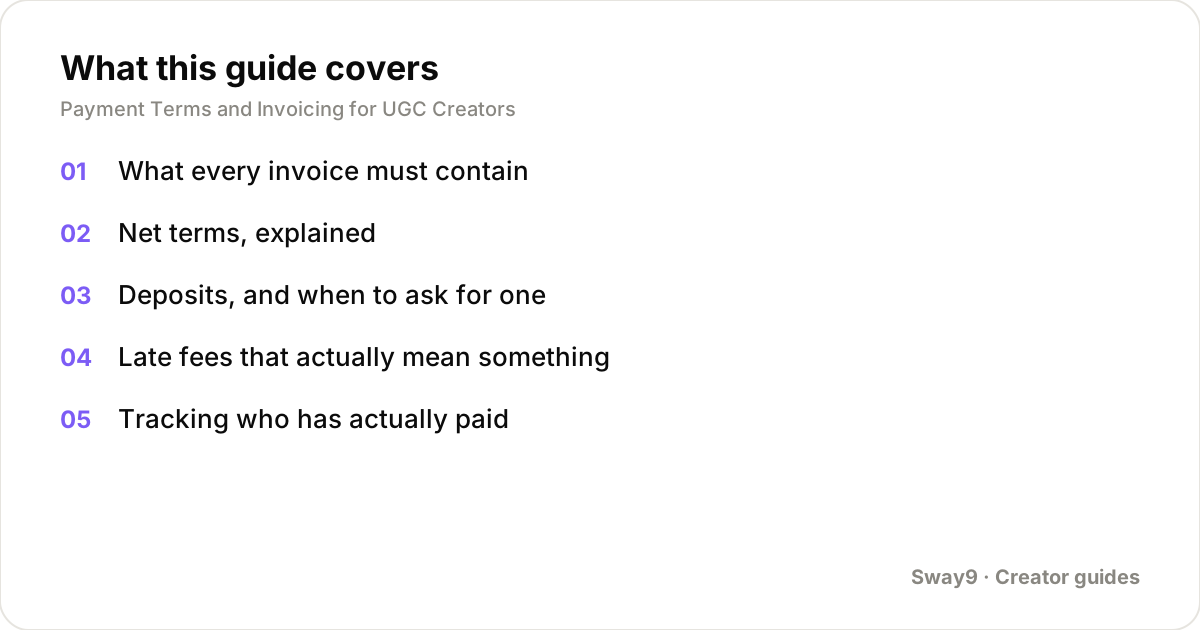
What every invoice must contain
Missing a purchase order number or a specific due date is the single most common reason an otherwise correct invoice sits unpaid. A brand's accounts payable process often can't act on it until that field is filled in, and nobody thinks to tell you why it stalled.
If you're billing a brand in a different country, add the currency code next to every amount, rather than a bare dollar sign. Check whether they need anything else too, such as a registration number or a specific invoice format, before you send the first one. Finding out after the due date has already passed just costs you the delay.
- A unique invoice number, so both sides can refer to it later
- Your name or business name and contact details
- The brand's billing contact and any purchase order number they've given you
- A description of the deliverable that matches what the agreement said
- The amount and currency, and how it was calculated if it's a per-view deal
- The due date, as a calendar date rather than just "net 30"
- How to pay you: bank details or the payment method you've agreed on
Net terms, explained
Net 15 or net 30 means payment is due 15 or 30 days after the invoice date. It's usually tied to delivery or approval of the content, rather than the date you sent the invoice. Net 30 is the most common default in brand and agency work.
Net 15 is reasonable to ask for from a brand you haven't worked with before. A longer term with no history is more risk than most independent creators can absorb.
Whatever term you agree on, put the specific due date on the invoice itself, rather than leaving the brand to calculate it. Note it in your own records the same day you send the invoice, not the day you remember to check.
Deposits, and when to ask for one
A deposit up front is reasonable for a first deal with a new brand, for a larger job, or for a bundle spanning several deliverables. Without one, you'd otherwise be carrying weeks of production cost before any payment lands.
A deposit of one-third to one-half of the total is a common range. It reduces how much of your own money is tied up in the job at any one time. And it doesn't ask the brand to pay everything before you've even started.
Late fees that actually mean something
State a late fee on the invoice itself, in plain language, before it's ever needed. A common structure: one and a half percent of the outstanding balance, added per month a payment runs past its due date.
Its real value isn't the size of the fee. It's that the fee is written down in advance. That makes a slow payer take the due date more seriously than an invoice with nothing attached to it.
A late fee written into your standard terms works better than one you invent after the fact. Brands are used to seeing them stated up front, and adding one retroactively rarely holds up as a serious ask.
Tracking who has actually paid
Once you have more than a couple of invoices open at once, a simple record beats memory. For each one, log the date sent, the amount, the due date, and whether it's paid. A basic spreadsheet is enough. The point is having one place to check, rather than reconstructing the answer from email search every time a brand asks.
If a brand deal is already set up as a campaign with its rate, this gets easier. What it's earned so far, and the effective rate once views have come in, is worked out for you as views update. Exporting that record to a spreadsheet gives you a paper trail alongside your own invoice log. The invoice itself is still something you send separately.
Keep the same log even for flat-fee work with no per-view maths involved. The value isn't the calculation. It's having one place that answers "who owes me money right now" without opening every email thread from this quarter.
When a payment is late
Follow up in writing a few days after the due date has passed. Reference the invoice number and restate the amount and due date, rather than assuming they remember the details.
If a second follow-up two weeks later still gets nothing, escalate to whoever signed the original agreement, rather than the day-to-day contact. A stalled invoice is often stuck in someone else's queue, not being deliberately ignored.
Keep every invoice and its follow-ups in the same place you're already logging payment status. A pattern with a specific brand — always thirty days late, always needing two nudges — becomes visible instead of feeling like a one-off each time. That pattern is also useful the next time you negotiate terms with the same brand.
Frequently asked questions
What payment terms should a new creator start with?
Net 15 or net 30 from delivery is standard. Net 15 is a reasonable ask from a brand you haven't been paid by before, since it limits how long you're waiting without a track record.
How much of a deposit is normal to ask for?
One-third to one-half of the total for a first deal, a larger job, or a multi-deliverable bundle. It reduces how much of your own time and cost you're carrying before payment arrives.
Do I need to charge a late fee?
Not always. But stating one on your standard invoice terms in advance makes a due date easier to enforce than adding a fee only after a payment is already late.
What's the most common reason an invoice doesn't get paid on time?
A missing field the brand's accounts team needs before they can process it. Most often that's a purchase order number or a specific due date, not any dispute over the amount.
Is this legal or tax advice?
No. This is general practice many creators use, not legal or tax guidance for your specific country or business structure. Check a professional for anything that depends on your situation.
Track your own accounts
Add your TikTok and Instagram handles, set each brand deal up as a campaign with its rate, and Sway9 pulls in every post and view and works out what the deal is worth. From $22/mo, cancel any time.
Get started Cancel any time · unlimited team members on every planSources: How to pay creators per view