Getting deals · for creators
What Brands Check Before They Pay a Creator
- Brands verify views and engagement directly from your posts, not from what you claim — keep recent, checkable posts ready.
- Engagement rate at similar view counts is often the tiebreaker between two creators a brand is considering.
- Past deliverables and reliability — did you hit the deadline, did the post go up — carry as much weight as the numbers.
Before a brand pays a creator, someone on their side runs through five checks. Are the views real and recent? Is engagement genuine, not just reach? Does the audience actually fit the brief? Did past sponsored posts get delivered and run? Is the creator reliable to work with? None of these are secret. They're the same things you'd check if you were the one paying.
Knowing the checklist in advance means each item can have an obvious, checkable answer ready. Get that ready before you apply or pitch. That way you won't find out after a brand goes quiet which one you failed.
1. Are the views real and recent?
The first thing a brand does with an application is open your profile. They look at your last several posts directly. They don't just take your follower count or a pitch email's claims at face value. They're checking two things: that the views on recent posts are plausible, and that there's enough recent activity to judge from at all.
To pass this one, make sure the account you're pitching with has posted recently. It also needs posts a brand can actually click through to. An account that hasn't posted in months gives a brand nothing current to check. Neither does one where the only strong post is from over a year ago.
2. Is the engagement genuine, not just reach?
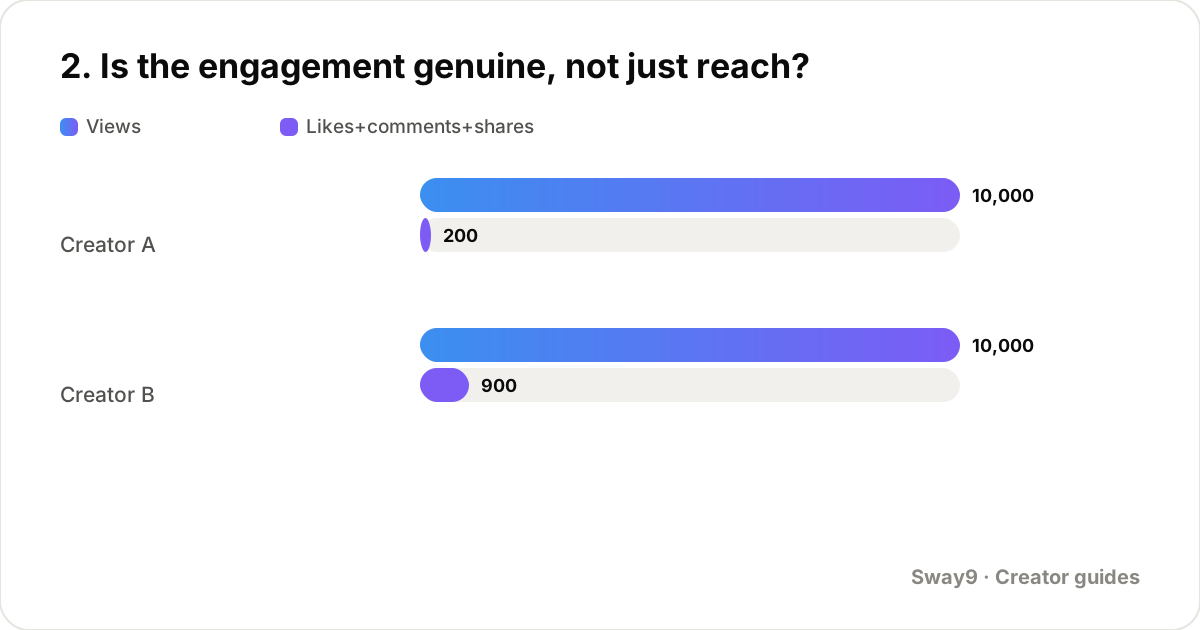
Two creators can show the same view count and be worth very different amounts to a brand. Views measure how many people saw the post. They don't measure whether those people did anything after watching. A brand comparing two applicants at similar view counts often uses engagement rate as the deciding factor.
Say both creators show 10,000 views on a recent post — see the worked example below. Same reach, but Creator B's post is doing more per view. Sway9's own tracking of 159 UGC posts found a median engagement rate of 4.44%. That gives you a rough sense of where typical sits. Creator A's 2.0% is below that middle; Creator B's 9.0% is well above it.
| Views | Likes+comments+shares | Engagement rate | |
|---|---|---|---|
| Creator A | 10,000 | 200 | 2.0% |
| Creator B | 10,000 | 900 | 9.0% |
3. Does the audience actually fit the brief?
A brand reads your niche and your comments section as a proxy for who's actually watching. Most creators don't hand over a formal audience breakdown. Say the brief is for a budgeting app, and your account is food reviews. The content overlap has to come from somewhere else — a specific series about money-saving, or comments that show a financially-minded audience. Otherwise the mismatch is the first thing that gets noticed.
This check goes both ways. Applying to briefs outside your niche wastes your time as much as theirs. Reading the brief and applying where the actual content overlap exists is worth more than applying broadly and hoping.
4. Did past deliverables actually happen?
If you list past brand names in a pitch, expect a brand to check them. Is the post still up? Does it match what was promised? Did it run on the timeline it was supposed to? A brand name with nothing to point to is weaker evidence than a working link to the post itself.
If you can, keep a running note of what each past deal actually delivered. Don't just note that you worked with a brand — note what the post did in views, and whether it ran on time. That turns a list of logos into a list of results, which is what's actually being checked.
5. Are you reliable to work with?
Numbers get you considered. Reliability gets you paid on time, and asked back. Brands, and especially the person managing several creators on one campaign, are watching for a few things.
This one is hard to fake and easy to demonstrate. Answer promptly. Confirm the deadline back to them in your own words. If you're going to be late, say so before the deadline, not after.
- Do you respond to messages within a reasonable window
- Do you ask clarifying questions instead of guessing at the brief
- Do you deliver on the date you agreed to
How your asking rate gets checked against your numbers
When you quote a flat rate, most brands do a quick sanity check. They divide what you're asking by your typical views in thousands. That tells them what CPM your rate implies. A number that's far outside what they'd normally pay for that view range gets you passed over fast. That's true even if your content is good.
Say you ask for $500 flat, and your typical post lands around 8,000 views — see the worked example below. That implies a CPM high enough that most brands paying per view will question it before they question your content. If your rate is flat rather than per-view, be ready to explain the number in terms of your typical views anyway. The brand does that division whether you show your math or not.
Applicant behaviors that fail these checks quietly
A few patterns trip these checks without the applicant realizing it. Applying with an account you don't actually plan to post from fails the real-views check fast — tracking looks for posts that never show up. Quoting round, suspiciously clean view numbers, with no post to point to, reads as an estimate dressed up as fact.
Going quiet mid-negotiation, then resurfacing days later as if nothing happened, sends a reliability signal too. It makes a brand hesitate on the next deal, even if this one worked out.
None of these require dishonesty to trigger. They're just as often a rushed application as a deliberate one. Slowing down enough to apply with the right account, quote numbers you can back up, and respond consistently covers most of it.
Getting your answers ready before you're asked
Every check above has the same shape. A brand wants a specific, checkable answer. The creators who get paid quickest already have that answer on hand. They're not scrambling to pull it together after being asked. Tracking your own accounts is most of the work — knowing your recent median views and engagement rate, rather than reconstructing them from memory when a brand asks.
In Sway9 you add your own TikTok or Instagram handles. The app pulls every post and its views automatically, and keeps a per-post daily history. So when a brand asks what your posts actually do, you have an answer with numbers behind it, not an estimate.
The free plan tracks 3 accounts on 100 credits a month. Paid plans start at $22 a month for 25 accounts, for a manager fielding this question across a roster.
Frequently asked questions
Do brands actually check every applicant this closely?
Not with the same depth every time. A brand running a large open campaign may only glance at views and verification. A brand negotiating a bigger one-off deal will look harder. Either way, having the answers ready costs you nothing.
What if my engagement rate is below average?
Be ready to explain it, rather than hide it. Maybe it's a recent platform change, a new content format you're still tuning, or your niche just runs lower engagement generally. A brand that sees you're aware of your own numbers reads better than one who finds a low rate you didn't mention.
Does audience size matter if engagement is strong?
It matters less than people assume for pay-per-view deals specifically. Payout is tied to views, not to being picked for follower count. A smaller account with strong, checkable engagement can be a better bet than a larger one with weak engagement.
How do I show reliability if I haven't done many brand deals yet?
Respond quickly and clearly during the application and negotiation itself. That's the reliability check most brands can actually observe before hiring you, since your deal history isn't visible to them yet.
Should I bring up all five checks proactively in a pitch?
You don't need to name them explicitly. But structure your pitch so it answers all five: recent numbers, engagement, fit, past results, and a clear response. That does the work without needing a checklist header.
Track your own accounts
Add your TikTok and Instagram handles, set each brand deal up as a campaign with its rate, and Sway9 pulls in every post and view and works out what the deal is worth. From $22/mo, cancel any time.
Get started Cancel any time · unlimited team members on every planSources: Sway9 — What 159 tracked UGC posts actually looked like