Getting deals · for creators
What a UGC Portfolio Needs Beyond Pretty Videos
- Every video needs a result next to it: a view count, an engagement number, or a computed rate, not just the clip.
- Show range across at least three formats — talking-head, faceless/voiceover, and a product demo — so a brand can picture you handling their brief.
- Cut anything you can't back with a real number or link. Five verifiable entries beat fifteen you can't prove.
A portfolio of well-shot videos with no numbers next to them proves you can film. It does not prove you can perform. What gets deals is the combination: a few clips that show range, each paired with a result the brand can check. That means views, an engagement number, or what the post would be worth under a standard rate.
Polish gets someone to watch your reel for ten seconds. Results get them to reply to your pitch. Below is what to put next to each video and how many formats to cover. It also covers how to lay it out so a brand can scan it in under a minute.
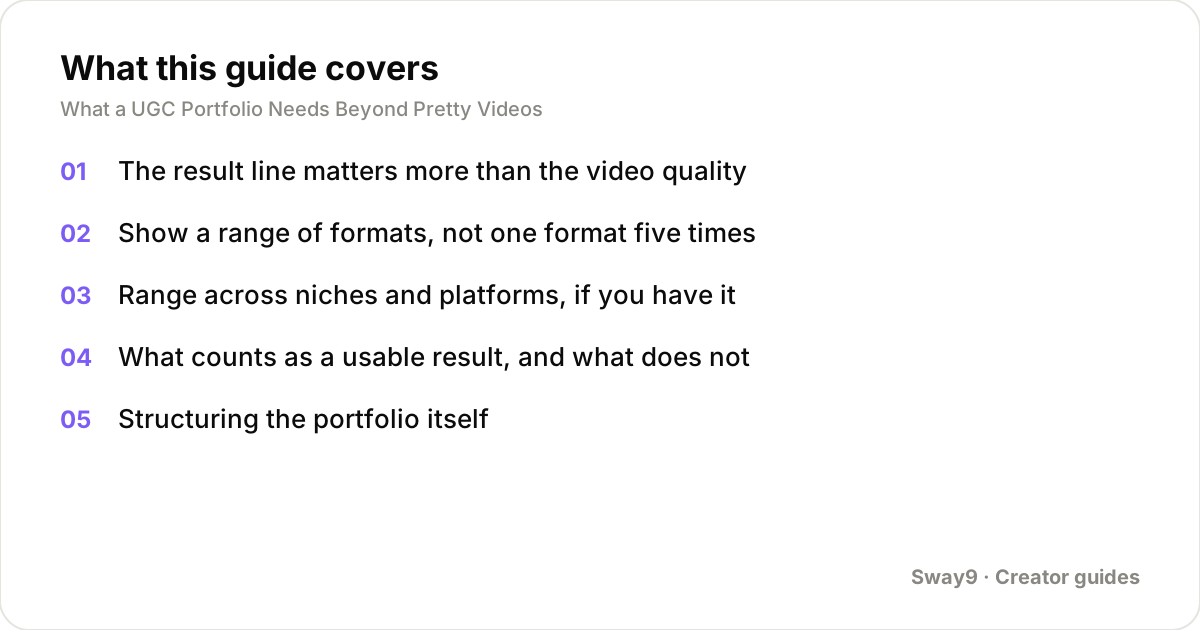
The result line matters more than the video quality
A brand skimming portfolios is trying to answer one question fast: did this content actually perform, or is it just well-produced? A video with no number attached forces the brand to guess, and most won't bother. Next to every video, add a short result line: the view count the post reached, plus one more figure such as an engagement rate if you have it.
If the deal was a flat fee, you can still show a result by converting it to a rate. Divide the flat fee by the views in thousands. That gives you the effective CPM the post delivered — stating it tells a brand more than the flat number alone.
Show a range of formats, not one format five times
Five near-identical talking-head videos prove you can do one thing well. They don't prove you can handle a brief that asks for something else. That's a real risk from the brand's side — they're picturing their own campaign, not your favorite format.
Cover at least three distinct formats. One with your face on camera. One faceless, like a voiceover over B-roll or a slideshow edit. One built around a product directly, like an unboxing or a demo.
If you genuinely only have one format in your history, say so plainly. Don't pad the portfolio with weaker examples of formats you rarely make. 'This is what I make, and it performs' is a stronger pitch than a broad but thin one.
Range across niches and platforms, if you have it
If you've worked across more than one niche or platform, show that too. It answers a second question brands ask: can you adapt the format to our category, not just repeat your usual one. A skincare post and a kitchen-gadget post, both performing, say more about your range than five skincare posts of similar quality.
Don't force this if it isn't true yet. A creator two months into brand deals, with three posts all in one niche, should show those three well. Range is a bonus signal, not a requirement you need before pitching at all.
Platform range is worth showing on its own. A brand running an Instagram campaign wants to see you've actually posted there. If your history is almost entirely TikTok, one real Instagram post beats three more TikTok examples for that pitch. It directly answers the question being asked.
What counts as a usable result, and what does not
The general rule: if a brand couldn't click through and see roughly the same number themselves, treat the claim as unverifiable. Back it with something they can check, or leave it out.
- A view count from the post itself, ideally with a link so the brand can check it — usable.
- An engagement figure (likes, comments, shares or saves) alongside views — usable, and stronger paired with views than alone.
- A flat fee converted to an effective CPM, using the arithmetic above — usable, and useful when the original deal wasn't pay-per-view.
- A vague line like 'went viral' with no number — not usable. Find the number or drop the claim.
- A screenshot from a private analytics dashboard the brand can't verify — weak. Pair it with the public view count wherever possible.
Structuring the portfolio itself
Lead with your strongest, most recent result. Brands rarely make it past the first three entries, so don't bury the best one fourth. For each entry, use the same small set of tags every time: format, platform, and the result line above.
Consistency matters more than design. A plain list where every entry has the same tags and a result is easier to scan than a beautifully designed page where each entry looks different.
Keep the whole thing short. Five to eight strong entries with real numbers beat fifteen entries where half have no result attached. A brand deciding whether to reply wants a fast, confident scan, not a career retrospective.
It also helps to note the deal type at the top of each entry. Was it a paid flat-fee post, a pay-per-view campaign, or a gifted post with no payment? Brands read a strong view count differently depending on the deal type, so label it honestly.
Keeping the portfolio current without redoing it from scratch
A portfolio goes stale the moment its newest entry is six months old. A brand reading it wants to know what you can do now, not what you did once. Treat updating it as part of finishing a deal. Once a post's numbers have settled, pull the view count. Swap it into your best-performing slot if it beats what's there.
If you track your posts somewhere that keeps a running history, export those numbers rather than re-screenshotting a dashboard by hand. A view trajectory over time is stronger evidence than one screenshot, because it shows the number is real and not cropped to look better than it is.
Frequently asked questions
How many portfolio entries do I need to start pitching brands?
Three real entries with honest results are enough to start, especially if they show at least two formats. Waiting for fifteen perfect entries just delays deals you could already be getting.
Should I include a deal I'm not proud of if the video was weak but results were good?
Yes, if the result is strong. A less polished video with a strong effective CPM is more useful evidence than a beautifully shot video with no number attached. Results are what the portfolio exists to prove.
Can I use a brand's finished ad cut of my content if I don't have my own copy?
Only if you have the rights to show it and it's clearly your content. If a usage agreement restricted how you can share the edited version, use your original organic post instead. That version is unambiguously yours to display.
What if I don't have permission to disclose the rate I was paid?
Leave the exact rate out and show the view or engagement result instead. Those numbers don't reveal what you were paid, and are usually not covered by a confidentiality clause the same way a rate is. If in doubt, just ask the brand.
Do I need a fancy media kit design, or is a simple document fine?
A simple, consistent document with real numbers beats an elaborate design with thin evidence. Spend your time finding and verifying your best results before spending it on layout.
Track your own accounts
Add your TikTok and Instagram handles, set each brand deal up as a campaign with its rate, and Sway9 pulls in every post and view and works out what the deal is worth. From $22/mo, cancel any time.
Get started Cancel any time · unlimited team members on every plan