Tracking · for creators
Running Multiple Niche Accounts as One Creator Business
- Treat your accounts as one business for planning and time, but price and track each one separately.
- Set a different CPM or flat rate per account, based on that account's own typical views and niche.
- Keep each deal's views attributed to the account that posted it. Never combine view counts across accounts.
Run your accounts as one business, but track and price each one on its own numbers. Your accounts share your time and your brand relationships. That makes them one business for planning. But each account has its own audience and its own typical view count. That makes each one a separate product, not a smaller copy of your main account.
This guide shows how to set that up without tripling your admin work. Keep one calendar and one tax return. But keep separate view history, separate rates, and separate deal records per account.
Why 'one business, several accounts' is the right frame
A creator with three accounts is still one business for planning. You have one calendar. One set of brand relationships. One person filming and editing. One tax return at the end of the year. Splitting your admin into three separate operations just creates extra work.
What should split is the product, not the business. Your main account is a different offer to a brand than a newer niche account. Both are worth selling. But they are not the same thing. Pricing them the same under-charges one and over-charges the other.
Track each account on its own numbers
Keep each account's posts and views separate. An average across all your accounts hides the number you actually need. Say your main TikTok gets 20,000 views a post, and your niche cooking Instagram gets 5,000. A blended average is useless for pricing either one. It understates the main account and overstates the niche account.
Track post-level history per account, not a lifetime follower count. A brand negotiating a niche-account deal will ask what that account's posts usually do. 'Somewhere around 5,000, I think' is a weak answer. A number backed by your last ten posts on that exact account is a strong one.
Price each account differently — a worked example
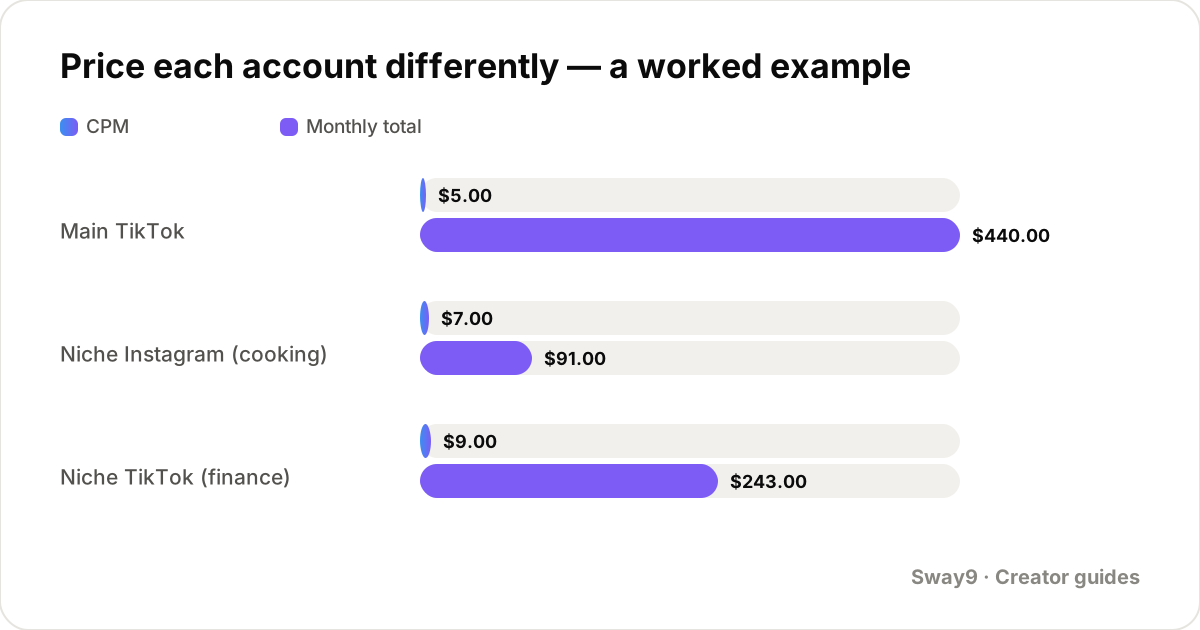
Here are one creator's three accounts. Each has a different typical view count. Each account sets its own CPM. The rate comes from that account's own numbers, never copied from another account.
A finance audience is worth more per view to a finance brand than a lifestyle audience is to a general consumer brand. That is why a niche account can often charge more per view, not less.
| Account | Avg views/post | CPM | Monthly total |
|---|---|---|---|
| Main TikTok | 22,000 | $5.00 | $440.00 |
| Niche Instagram (cooking) | 6,500 | $7.00 | $91.00 |
| Niche TikTok (finance) | 9,000 | $9.00 | $243.00 |
Why the niche accounts can charge more per view, not less
It's tempting to give a smaller account a lower rate across the board, since it has fewer views to sell. That's only true when the niche account is a smaller copy of your main audience.
It's not true when the niche account reaches people a specific brand cares about. Think a finance brand, an ingredient supplier, or a specialty tool company. Those brands pay for relevance, not raw reach.
A 9,000-view finance post can be worth more to a finance brand than a 22,000-view lifestyle post is to a general brand. More of those 9,000 viewers are people the finance brand actually wants.
Set each account's rate by asking what that audience is worth to that type of brand. Don't discount your main-account rate just because the niche account has smaller reach.
Keep deals attributed to the account that posted them
Once a deal is running, keep its views tied to the account that actually posted the content. This gets tricky when a brand runs one deal across two of your accounts. Say a post on your main TikTok, and a post on your niche Instagram, both under one agreement.
Treat that as two deliverables. Attribute each one to its own account with its own view count. Don't combine them into one number. If the deal pays per view, the brand expects to see each post's own performance, not a pooled figure that could hide one account underperforming the other.
This matters for your own records too. A pooled number tells you nothing about which account is worth your time. Per-account, per-deal numbers tell you exactly which one is paying for the hours it costs you.
Budgeting your time across accounts
With three accounts pulling from the same hours, ask which one earns the most per hour of your time. Total earnings matter less than that.
A niche account that takes 30 minutes to film and pays $45 a post beats a main-account post that takes three hours for $110. The second number is bigger. But the first uses your evening better.
Take your per-account totals from above. Divide each by the hours that account usually takes. Now you have a real basis for deciding where to spend a limited week, instead of defaulting to whichever account has the most followers.
In the example above, the finance TikTok took about 45 minutes per video to script and film. At $81 a post for 45 minutes, that account earns more per hour than the main account does. The main account's $110 post took three hours end to end. Neither number is more 'correct.' They answer different questions, and both are worth tracking.
Where tracking software fits
The practical need is simple. Keep view history per account and per post in one place. Set a different rate per deal without the accounts bleeding together.
In Sway9, you add each of your own TikTok or Instagram handles as a separate tracked account. The app pulls every post and its views automatically, up to three times a day, and keeps a daily history per post.
Each brand deal is set up as its own campaign with its own rate: CPM or flat. A deal on your niche account computes its own effective CPM on its own, independent of your main account.
The free plan covers up to 3 tracked accounts with 100 credits a month. The paid tier starts at $22/month for 25 accounts. That's aimed more at managers running a roster than one creator with a couple of side accounts.
Frequently asked questions
Should I use the same media kit or profile for all my accounts?
No. Keep each account's pitch specific to what that account actually delivers: its own views, its own audience, its own niche. A brand looking at the niche account wants to know what that account does, not what your biggest account does.
Is it worth starting a niche account if my main account already works?
That depends on two things: does a brand specifically want that niche audience, and do you have time to post there consistently? An account that gets occasional attention won't build the post history you need to price it. If you start one, track it from the first post.
Can I combine two accounts' views to hit a campaign's minimum?
No. Treat each account's posts as separate deliverables with their own view counts. A campaign's minimum is almost always per post, not per creator. Combining numbers across accounts misrepresents what any single post actually did.
How many accounts is too many to run as one business?
There's no fixed number. The real limit is your time, and your ability to keep each account's tracking and pricing genuinely separate. Three accounts tracked properly beats five accounts where the numbers have blurred together.
What if a brand only wants my main account and ignores the niche ones?
That's normal, and it doesn't mean the niche accounts are worthless. It usually just means the brand's product fits your main audience better. Keep pitching the niche accounts to brands whose product actually matches that audience.
Track your own accounts
Add your TikTok and Instagram handles, set each brand deal up as a campaign with its rate, and Sway9 pulls in every post and view and works out what the deal is worth. From $22/mo, cancel any time.
Get started Cancel any time · unlimited team members on every plan