Tracking · for talent managers
The Monthly Roster Performance Report for Talent Managers
- Effective CPM (earnings divided by views, in thousands) lets you compare a $75 flat deal against a $5 CPM deal on equal terms.
- Report per deal, not just per creator — a per-creator total can hide one badly underpriced deal.
- A roster average CPM is only useful alongside the spread. One creator earning most of the roster's total is a risk worth naming.
A monthly roster report needs three numbers, tracked at two levels: total views, total earnings, and effective CPM — what you actually earned per 1,000 views. Track these once per creator, and again per deal within each creator. That way you see not just who's earning the most, but which specific brand deals are actually paying well.
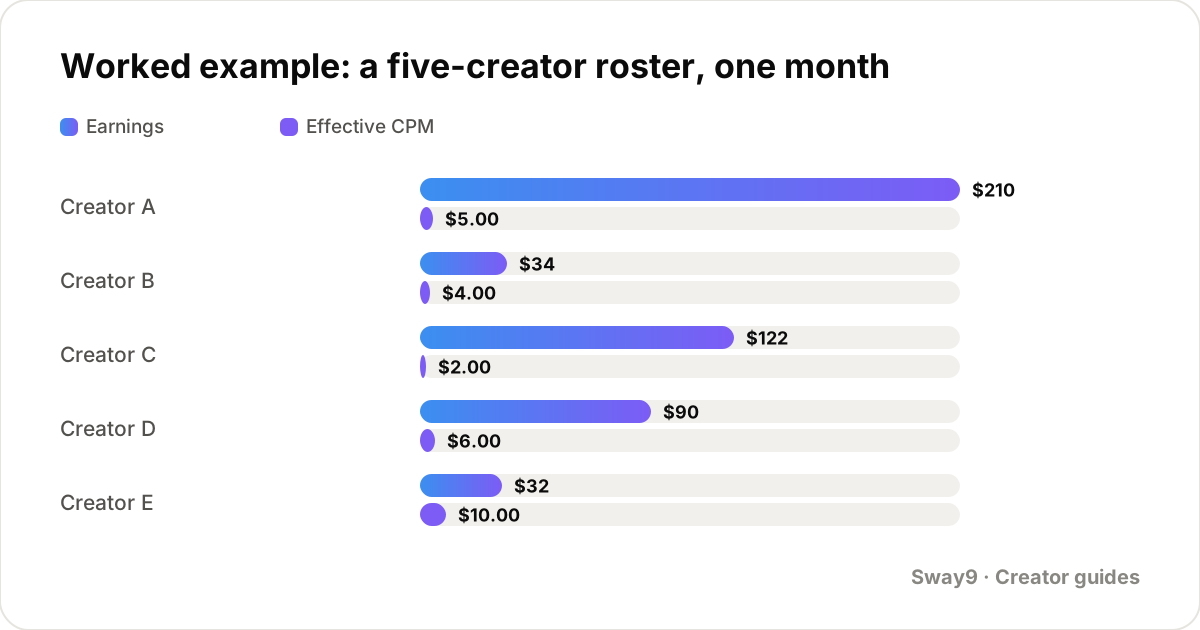
Below is what that report looks like, against a worked five-creator roster. It includes the per-deal breakdown a per-creator total alone would hide — and what each pattern is worth acting on.
The three numbers, at two levels
Every creator needs three tracked numbers for the reporting period: total views, total earnings, and effective CPM. Effective CPM is earnings divided by views, in thousands. It makes a flat-rate deal and a CPM deal comparable on the same footing.
A $75 flat payout on 18,000 views works out to almost the same rate per thousand views as a $4 CPM deal on 18,750 views. That's true even though one was never quoted as a CPM at all.
The same three numbers need repeating one level down, per deal within each creator. A creator's overall average can look fine while hiding one deal that's paying far worse than the others — a pattern only visible once you stop averaging.
It's worth being precise about what each number does. Total views tells you reach, and says nothing about money on its own. Total earnings tells you what came in, and says nothing about whether that was a fair rate for the exposure. Effective CPM connects the two — which is exactly why it belongs in the report, not calculated ad hoc whenever someone asks if a rate looks fair.
Worked example: a five-creator roster, one month
Across the roster: 129,700 total views and $488 total earnings, for a roster-average effective CPM of $3.76. That average alone would suggest a roughly consistent roster.
But the spread underneath is wide. Creator C sits at $2.00 — high-view, low-rate deals. Creator E sits at $10.00 — a flat-rate deal with a floor that kicked in on a low-view post. Neither number is a problem by itself. What matters is knowing which one you're looking at, before deciding whether to renegotiate anything.
| Creator | Views (month) | Earnings | Effective CPM |
|---|---|---|---|
| Creator A | 42,000 | $210 | $5.00 |
| Creator B | 8,500 | $34 | $4.00 |
| Creator C | 61,000 | $122 | $2.00 |
| Creator D | 15,000 | $90 | $6.00 |
| Creator E | 3,200 | $32 | $10.00 |
Effective CPM by deal, not just by creator
Creator A's $5.00 average CPM above is itself an average across three deals. Breaking it down by deal shows why per-creator totals aren't the whole picture.
The Brand X deal, at $4.17 effective, is quietly underpaying compared to what this creator gets from Brand Z on similar views. That's worth raising at renewal, rather than carrying forward at the same flat rate by default. This comparison only exists once deals are broken out individually — the $5.00 creator-level average looked unremarkable on its own.
This is also the level at which it's fair to compare rates across different creators for a similar deal type. If a second creator with comparable views gets $5.50 effective from a different brand, that's useful.
Bring that number into your next Brand X renewal conversation. Think of it as your own record of what similar work is worth elsewhere on the roster — not a public comparison between creators.
| Deal | Structure | Views | Earnings | Effective CPM |
|---|---|---|---|---|
| Brand X | $75 flat | 18,000 | $75 | $4.17 |
| Brand Y | $5 CPM | 14,000 | $70 | $5.00 |
| Brand Z | $65 flat | 10,000 | $65 | $6.50 |
What to act on when effective CPM drops
A falling effective CPM on a flat-rate deal usually means views have grown since the rate was set, and the flat fee hasn't kept pace. That's worth flagging at renewal, not mid-contract.
On a CPM deal, a falling effective rate is less likely, since the rate is fixed per view by definition. It's still worth checking that the agreed CPM is the one actually being paid — manual tracking is where these numbers drift from the contract.
A rising effective CPM on a flat-rate deal is the mirror case. It's tempting to treat it as good news and move on. Flag it anyway.
If a creator's views have dropped since a flat rate was set, the brand is now getting less for the same money. A brand that notices this on its own tends to notice all at once, at renewal. Bringing an honest number to that conversation first is usually the better position.
What to act on when views concentrate in one creator
If one creator accounts for a large share of the roster's total views or earnings for the month, that's worth naming. It's true even when overall numbers look healthy. It means the roster's reported performance is really one creator's performance, with company.
In the example above, Creator C alone accounts for 61,000 of the roster's 129,700 views — close to half. That's despite having the lowest effective CPM. A brand client reading only the roster total would be looking mostly at one creator's output, without realizing it.
The fix isn't to hide this. Report it as its own line: what share of this month's views or earnings came from the single largest creator, alongside the roster total. A number that stays steady month to month just describes how the roster works. A number that jumps suddenly is worth asking about before it becomes a surprise in a client conversation.
Cadence and who sees which version
Monthly is the right cadence for this report internally. It's frequent enough to catch a rate problem before it repeats across several deals. It's infrequent enough that one slow week doesn't read as a trend.
Brand clients typically only need the slice relevant to their own deals and creators, not the full roster. The same underlying numbers usually need splitting into a client-facing view and an internal one.
Add a weekly glance at the same three numbers for any creator or deal flagged as a problem in the last monthly report. Don't make the whole roster's reporting weekly — that mostly adds noise for deals performing as expected. The value is in catching a change quickly for the ones that aren't.
Where the numbers come from
Pulling per-post views by hand from each creator, every month, is the main reason this report gets skipped or goes stale. In Sway9, each creator's tracked accounts sync automatically up to three times a day, with a daily history kept per post.
Every brand deal is set up as a campaign with its rate. Effective CPM per creator and per deal is computed as views come in — not recalculated by hand at report time.
CSV export gets the same numbers into whatever document the report actually lives in. Team members are unlimited, so more than one person on the account-management team can pull the same figures without passing one spreadsheet around.
Frequently asked questions
What's a healthy effective CPM for a roster report?
There isn't a universal healthy number — it depends on niche, platform and deliverable type. The report is for spotting a change or a spread over time, not comparing against an external benchmark. Compare a creator's or deal's own number against its own history, not against a published figure.
Should the report include follower counts?
Not as a primary metric. Views and earnings are what actually happened. Follower count doesn't change based on performance, and can make a low-view, high-follower creator look better than the numbers support.
How far back should the trend line go?
Three to six months is usually enough to tell a genuine trend from one unusual month, without so much history that a one-off spike distorts the average.
Who should see the full-roster report versus a per-client slice?
Internal team members managing the whole roster need the full report. A brand client typically only needs the numbers for their own deals and creators, not the agency's other clients' figures.
What if a deal's terms changed mid-month?
Split the month's report at the terms-change date if the difference is material. Blending two different rates into one monthly average will understate or overstate the effective CPM for the period.
Track your whole roster in one place
Every creator's accounts, every deal set up as a campaign with its rate, every post and view pulled in automatically. From $22/mo for 25 tracked accounts, unlimited team members, no per-seat fees.
Get started Cancel any time · unlimited team members on every plan