Tracking · for creators
Records Brands and Accountants Need From Creators
- Keep four record types per deal: the agreed terms, proof you posted it, a view report, and the invoice or payment record.
- A single screenshot at posting time isn't enough proof of performance. Keep a record that shows the view count over time.
- This is general record-keeping guidance, not tax advice. For anything tax-specific, talk to a professional who knows your situation.
A creator business needs four kinds of records. The deal record covers what was agreed. Deliverable proof shows you posted it. The view report shows what it did. The invoice shows what you were paid. Keep all four and you can answer almost anything a brand or an accountant asks.
A creator business generates paperwork whether you organize it or not. The difference shows up when a brand disputes a payout, or an accountant asks what a number means. Miss one of the four records, and the gap tends to show up at the worst time — mid-dispute, or mid-tax-season.
None of this is tax advice. For anything tax-specific, talk to an accountant who knows your situation and jurisdiction. This is about the records that make that conversation possible in the first place.
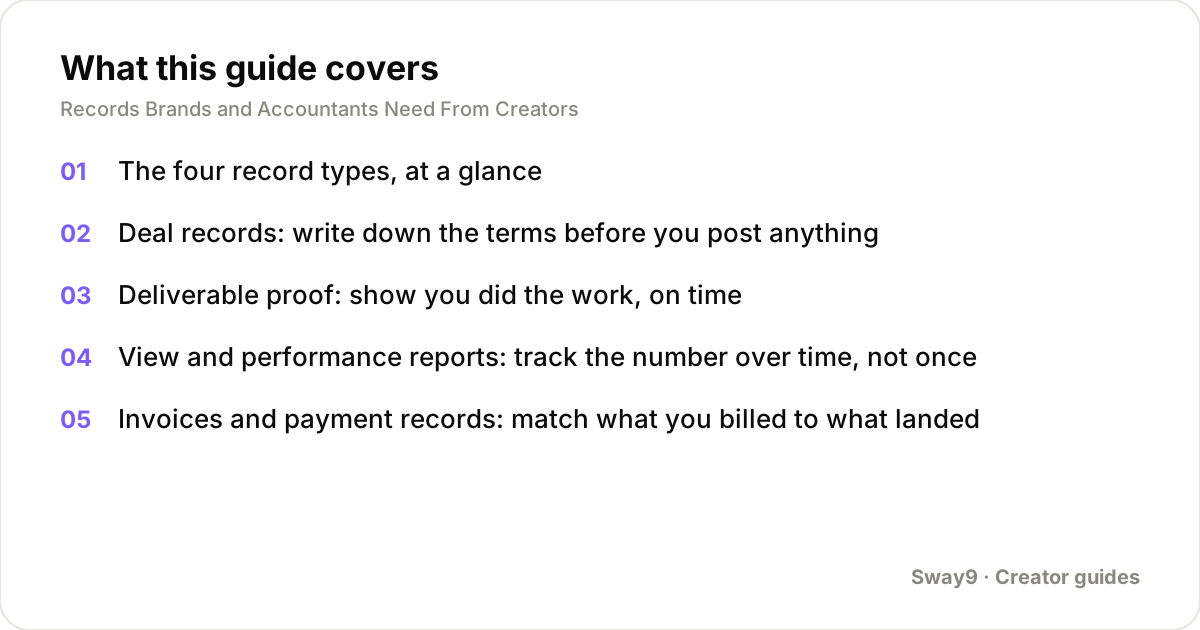
The four record types, at a glance
Each of the four answers a different question, if it's ever asked. What did we agree? Did you do it? What did it do? Were you paid correctly? Miss any one of them, and that question becomes unanswerable later — usually right when it matters most.
| Record type | What it captures | Why you need it |
|---|---|---|
| Deal record | Rate, cap, minimum, deliverables, dates | Settles disputes about what was promised |
| Deliverable proof | Link to the post, date posted | Confirms you did the work on time |
| View report | View count over time, not one screenshot | Shows what the post actually did |
| Invoice / payment | Amount billed, amount received, date | Reconciles what you were owed |
Deal records: write down the terms before you post anything
A deal record doesn't need to be a formal contract to be useful, though a written agreement is worth having for larger deals. At minimum, write down the rate, the cap if there is one, and the minimum view threshold if there is one. Note exactly which deliverables are included, whether usage rights are part of the deal or priced separately, and the dates involved.
Do this before you post, not after. A rate agreed in a DM thread that has since scrolled away is hard to point back to. A short note you saved the day the deal was agreed is much easier. If the brand sends a brief or contract, keep the actual document, not a summary of it.
This matters most on deals with a per-view rate. The arithmetic behind a payout dispute always traces back to the terms as agreed. If you and a brand later disagree about whether a cap was $100 or $150, only the written record settles it — not either side's memory. Save it somewhere you'd actually find it months later.
Deliverable proof: show you did the work, on time
Deliverable proof is simply evidence that you posted what was agreed, when it was agreed. Keep the live link to the post, and note the date and time you posted it — especially if the deal had a specific posting window. A screenshot taken at the moment of posting helps too, mainly as backup if the post is ever taken down or edited.
This matters most when a deal has a posting deadline, or when a brand's approval process wants confirmation the content went live as agreed. Saving a link and a timestamp takes a minute, and it removes any ambiguity later about whether or when the deliverable actually happened.
View and performance reports: track the number over time, not once
This is the record most creators get wrong. A single screenshot of a view count feels like proof, but it isn't a strong one on its own. It tells you nothing about the post's trajectory: whether it's still climbing, already plateaued, or was captured at an unusually good or bad moment.
A running history of the same post's view count, over several days or weeks, is much stronger evidence of what the post actually did. That's true both for a brand paying per view, and for you if you ever need to reconstruct what a deal was worth.
If a brand disputes a payout, the strongest thing you can produce is a short history, not one screenshot. For example: '18,200 views on day 3, 31,000 on day 7, 38,400 on day 14, stable since.' That's much harder to argue with. It shows the number was tracked consistently, not captured once.
Invoices and payment records: match what you billed to what landed
Whether you send a formal invoice or a simpler payment request, keep a record of it. Note the amount billed, the date, which deal it relates to, and the amount and date actually received. This is what lets you catch a short payment before too much time has passed. It's also what an accountant will eventually ask for when totaling up the year.
Keep these per deal, not as one running total with no detail behind it. Break each deal out with its own reference, rather than one combined line with nothing behind it. Reconstructing the detail later, from memory or scattered messages, is far harder than keeping it from the start.
A simple filing system that does not require special software
You don't need dedicated accounting software to keep these four record types straight, though it helps once your deal count grows. A folder per deal, named with the brand and month, containing the agreed terms, the post link, the view history, and the payment confirmation, covers the basics.
If you already track your posts somewhere that keeps a per-post view history automatically, that solves the hardest of the four records on its own. In Sway9, each brand deal is set up as a campaign with its rate.
The app pulls every connected account's posts and views automatically, keeping a daily history per post. The performance record largely builds itself as the deal runs. A CSV export of that history, saved alongside the deal's other records, closes the loop without extra tooling.
Whatever system you use, the goal is the same. When a brand or an accountant asks about a specific deal, you should be able to find the answer in minutes, not reconstruct it from memory.
How long to keep these records
How long you're required to keep financial records for tax purposes depends on your jurisdiction. Ask an accountant or check your local tax authority's guidance, rather than guessing — this article isn't the place for that answer.
Independent of any legal minimum, keep deal and performance records for at least as long as you might reasonably need to reference a brand relationship. Repeat deals with the same brand often reference the terms or results of a previous one.
Frequently asked questions
Do I need a formal contract for every brand deal?
Not necessarily for smaller or one-off deals, but you should always have some written record of the terms. A saved message thread or a short note you wrote right after agreeing is enough. Larger or ongoing deals are worth a proper written agreement.
What's the minimum I should track if I don't want to overbuild a system?
At minimum, keep the agreed rate and terms, the link to the live post, and a record of the view count over time rather than a single screenshot. Those three cover most disputes. Invoicing detail can be simpler if your deal volume is low.
Is a single screenshot of a post's views ever good enough?
It's better than nothing, but a history over time is meaningfully stronger evidence. A single screenshot can't show whether the number was still climbing, had plateaued, or was taken at an unusually good moment.
Should I ask my accountant what records they want before tax time?
Yes — ask early, not at year-end. Different accountants and jurisdictions may want slightly different formats or detail, and this article deliberately doesn't give tax-specific guidance, since that depends on your own situation.
Do I need separate records for each account if I run more than one?
Yes. Keep deal, deliverable, performance and payment records attributed to the specific account that earned them, the same way you'd attribute them to the specific deal. Mixing accounts together makes it much harder to reconstruct what any one of them actually earned.
Track your own accounts
Add your TikTok and Instagram handles, set each brand deal up as a campaign with its rate, and Sway9 pulls in every post and view and works out what the deal is worth. From $22/mo, cancel any time.
Get started Cancel any time · unlimited team members on every plan