Managing a roster · for talent managers
Onboarding a Creator to Your Roster: The First Two Weeks
- Get the paperwork (agreement, commission percentage, tax and payment details) signed before the first deal, not alongside it.
- Connect tracked accounts on day one, before setting a rate. A rate based on a guess usually needs renegotiating.
- Put posting cadence, response times and brand-safety rules in writing during week one. Verbal agreements cause early friction.
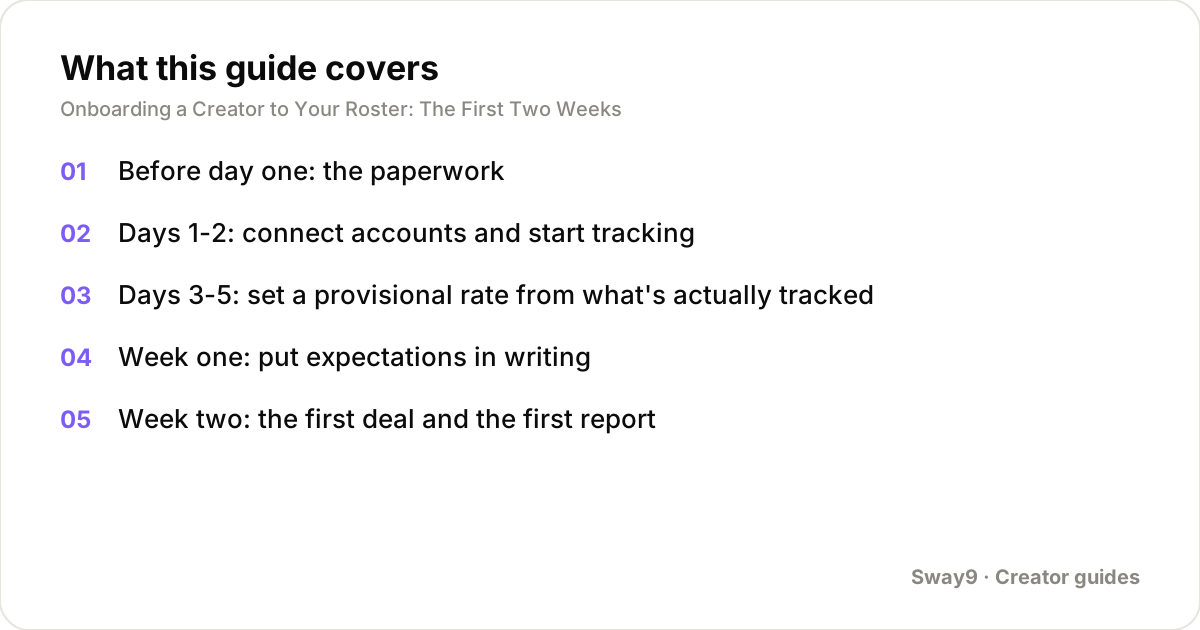
Onboarding a creator properly takes about two weeks. It covers four things, in order: paperwork before money changes hands, connecting accounts so performance is tracked from day one, a provisional rate, and expectations put in writing.
Skip the order — say, agreeing a rate before you've seen any tracked performance — and the rate usually needs renegotiating within a month or two.
Below is a week-by-week breakdown of what to do and when, ending with a checklist for the whole two weeks.
Before day one: the paperwork
Nothing about tracking or rates matters until the paperwork exists. At minimum, you need three things: a signed management agreement stating the commission percentage and its base, a tax form for their country, and payment details on file.
None of this is glamorous. But a verbal-only agreement on commission is a common source of disputes months later. By then, real money has changed hands, and memories of the original conversation differ.
If the creator is coming from another manager or agency, get one thing in writing first. Confirm any existing brand relationships or open deals, who they belong to, and under what terms — before folding them into the new roster's pipeline.
Decide now, not later, what happens to a deal already in negotiation with the previous manager but not yet closed. A clean rule helps: any deal not yet signed as of the transition date belongs to the new agreement. That avoids a dispute over a deal that closes two weeks after onboarding but was pitched before it.
Days 1-2: connect accounts and start tracking
Get every account that will run sponsored content connected — not just the creator's main one — before any rate conversation happens. In Sway9 this means adding each TikTok or Instagram handle once. The app pulls every post and its views automatically from that point, up to three times a day.
It builds a per-post history you won't have later if you don't start now. Starting on day one matters, because rate decisions in week one need real data. A few days of current views beats whatever the creator remembers from months ago.
This is also the point to check for a secondary or niche account that will carry sponsored content too. It's easy to onboard only the account you first heard about a creator through. A second account can end up carrying real deals a few months later — and by then, you're reconstructing its history after the fact.
Days 3-5: set a provisional rate from what's actually tracked
Once a handful of days of tracked posts exist, set a provisional rate from median views per post — not follower count, and not a guess. If there's no tracked data yet, use the creator's recent post history from before onboarding instead. The companion piece on building rate cards covers the arithmetic in more detail.
Treat this first rate as exactly that: provisional. It's there so the creator can take a deal in week two, not a number set in stone for the year.
Tell the creator plainly that the rate will be revisited once a full month of tracked data exists. That way a conservative provisional number doesn't read as a final judgment on their value.
If the creator has no post history at all — a genuinely new account — use a comparable creator already on the roster. Pick one at a similar stage, and set the provisional rate from their numbers. Review it sooner than 30 days, since real data arrives faster for a new account posting frequently.
Week one: put expectations in writing
Verbal agreements about posting cadence, turnaround time on brand requests, and off-limits brand categories are a common source of friction in the first month. Neither side wrote down what they thought they'd agreed.
A short written document, even a page, closes most of that gap. Cover posting frequency, response time, and any exclusions, before any of it becomes a problem.
This is also the point to confirm who owns communication with brands going forward. Does the creator route every brand DM through the manager? Or handle some contact directly, and loop the manager in after?
Cover response times in both directions, not just the creator's. A creator told to respond to brands within 24 hours reasonably expects the same back from the manager, on contracts, rates and approvals. An expectations document that only sets rules for one side tends to feel one-sided, even when that isn't the intent.
Week two: the first deal and the first report
With accounts tracked and a provisional rate set, week two is for the first live deal. Make it a smaller one, ideally — it doubles as a test of the whole pipeline: deal terms, deliverable tracking, and how cleanly the performance numbers come through.
At the end of the two weeks, run the creator's first individual report. Cover views so far, the deal's effective CPM, and a note on whether the provisional rate looks right given real data.
This first report is also the natural point to confirm the rate isn't final. Set a date — typically 30 days out — to revisit it against a full month of tracked performance. Reviewing this early, while the relationship is still new, tends to go smoother than waiting until a creator has been quietly unhappy for months.
Treat the first report as a working session with the creator, not a one-way summary. Walk through the numbers together, while everything is still fresh. That catches misunderstandings early — a creator surprised by how their effective CPM was calculated, or a manager who assumed a deliverable was already posted when it wasn't.
Checklist: the first two weeks
Run through this list for every new signing, in roughly this order, rather than treating it as optional once you already know a creator from other contexts.
- Signed management agreement with commission percentage and its base stated explicitly
- Tax form and payment details on file before the first deal closes
- Confirmation in writing of any pre-existing brand relationships or open deals, if the creator came from elsewhere
- Every relevant account, not just the main one, connected and tracking from day one
- A provisional rate set from tracked or recent median views, flagged explicitly as provisional
- A short written document covering posting cadence, response times, and any brand exclusions
- Agreement on who handles direct brand communication going forward
- A first live deal assigned, ideally smaller in size
- A first individual report run at the two-week mark, with a 30-day date set to revisit the rate
Frequently asked questions
How long should a creator's rate stay provisional after onboarding?
About 30 days is typical. That's enough time to gather a real month of tracked views, without leaving a new creator on a guessed rate indefinitely.
Should paperwork be finished before or after the first tracked data comes in?
Before. The agreement, tax forms and payment details don't depend on performance data. Holding them up for it just delays the point where a deal can legally close.
What if a creator already has brand deals in progress when they join the roster?
Get those deals' terms, and who they belong to, confirmed in writing first. Then fold them into the new pipeline and deliverables tracking, rather than treating them as outside the system.
Is it a problem to assign a smaller first deal rather than the creator's biggest opportunity?
No. A smaller first deal is a reasonable way to test the whole pipeline — paperwork, tracking, deliverables, reporting — before a larger deal depends on all of it working.
What's the most common onboarding step that gets skipped?
Putting expectations around posting cadence and brand exclusions in writing. Paperwork and rates tend to get attention because money is involved. The written expectations document often doesn't, and it's a common source of early friction as a result.
Track your whole roster in one place
Every creator's accounts, every deal set up as a campaign with its rate, every post and view pulled in automatically. From $22/mo for 25 tracked accounts, unlimited team members, no per-seat fees.
Get started Cancel any time · unlimited team members on every plan